


In last week’s car post, I highlighted some adorable tiny cars, like the Opel Adam and the Suzuki Ignis. And the Adam, at least, seemed to resonate with readers.
So I’m leaning in. This week is all about the tiny cars. The cuter and weirder, the better.
At least in the United States, tiny cars are a dying breed. They are, literally and metaphorically, the roadkill of the large (and profitable) SUVs and trucks that carmakers love to sell to Americans.
We all love tiny cars, but we wouldn’t buy them. That’s why none of the cars in this post were sold in the United States.
But in the face of market forces and the never-ending quest for profit, I believe that appreciating tiny cars is an act of speaking truth to power. We’re out here changing the world, y’all.
So let’s go.
Renault Twingo
1993–2007 (in most markets)
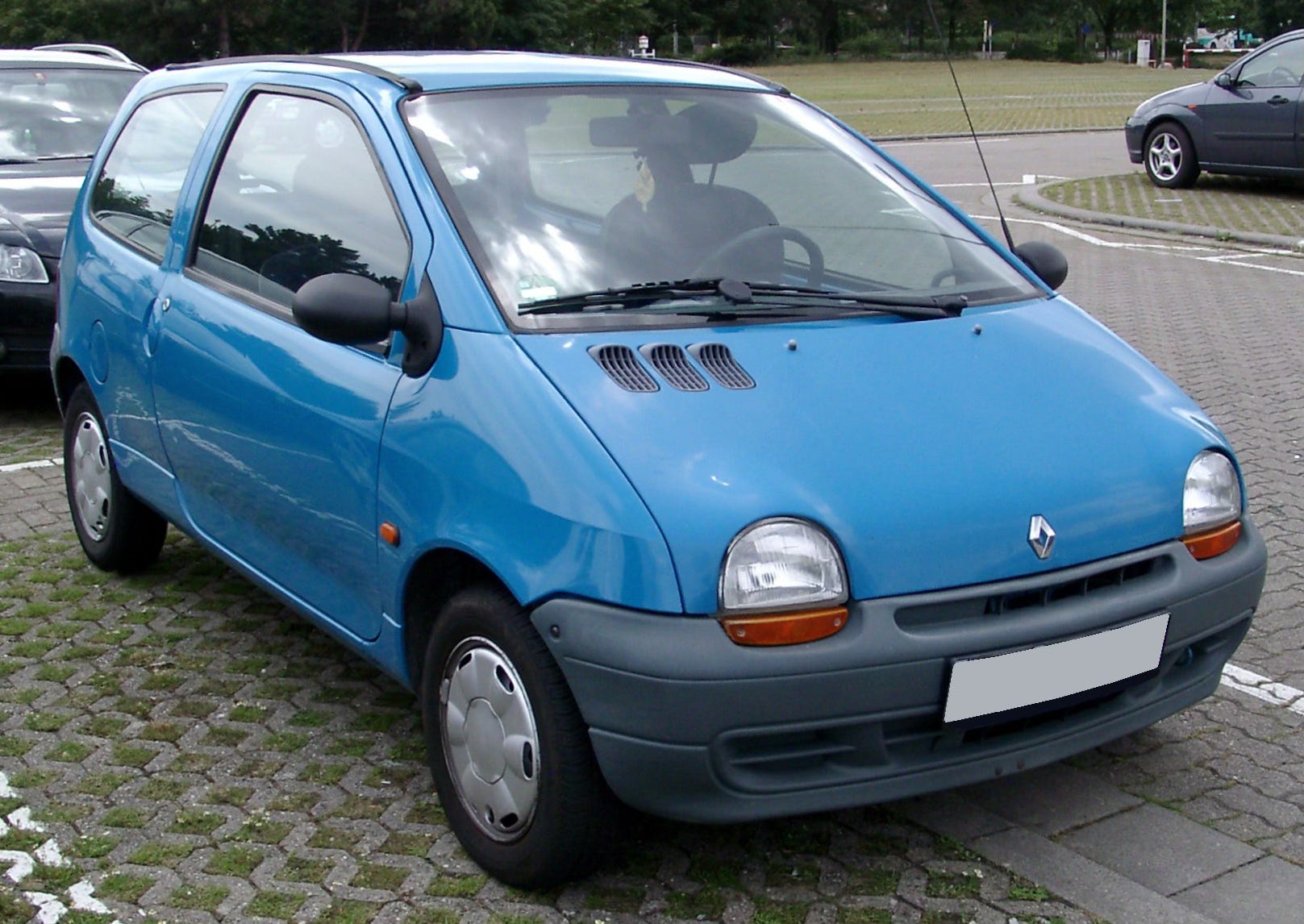
One of my favorite car journalists, David Tracy, introduced me to the wonders of the first-generation Twingo some years ago. Look at its little face with its little eyes and its tiny mouth. (And its funky three vents at the top-left of the hood.)
The interior of this car is wild. The seats fold into a bed-like configuration, all the controls and touchpoints are turquoise, the hazard light button is round and red, and the seat fabric is insanely ‘90s:


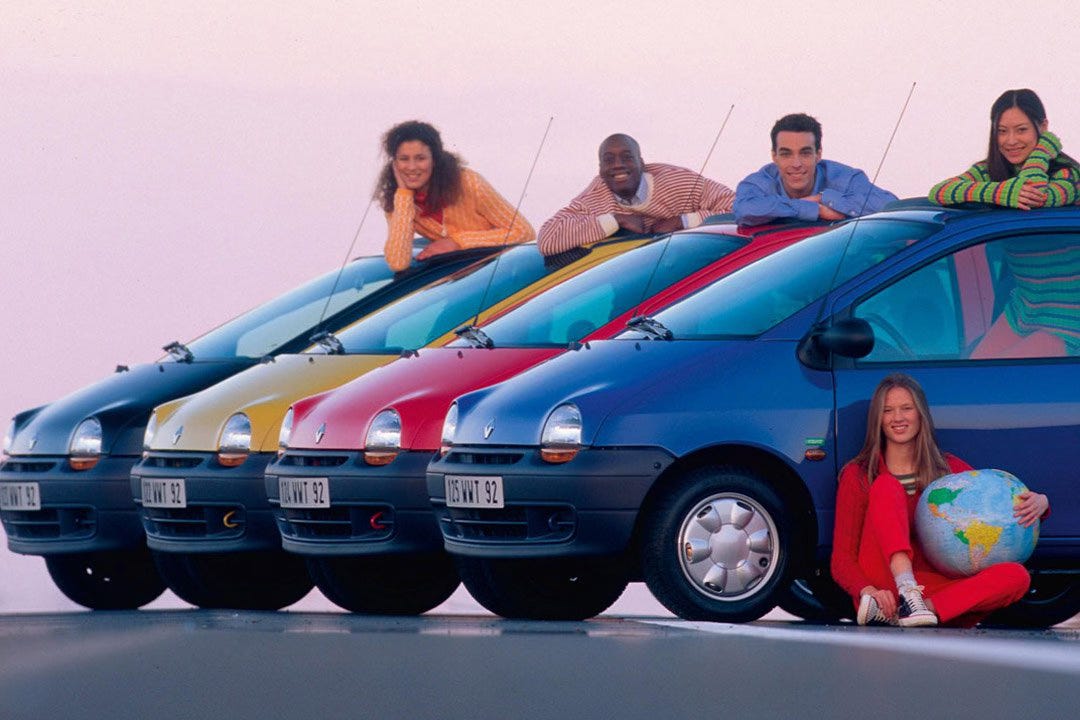
This marketing photo for the Twingo is the best photo of all time:
Photos: Wikimedia Commons, Google Images, Google Images, The Drive

Dive deeper
Read David Tracy’s overview of the Twingo
(Note: This article used to have photos, but they are all gone for reasons that involve G/O Media.)Take a look at the modern, electric Twingo inspired by this original model
Toyota Porte and Spade
2012–2020
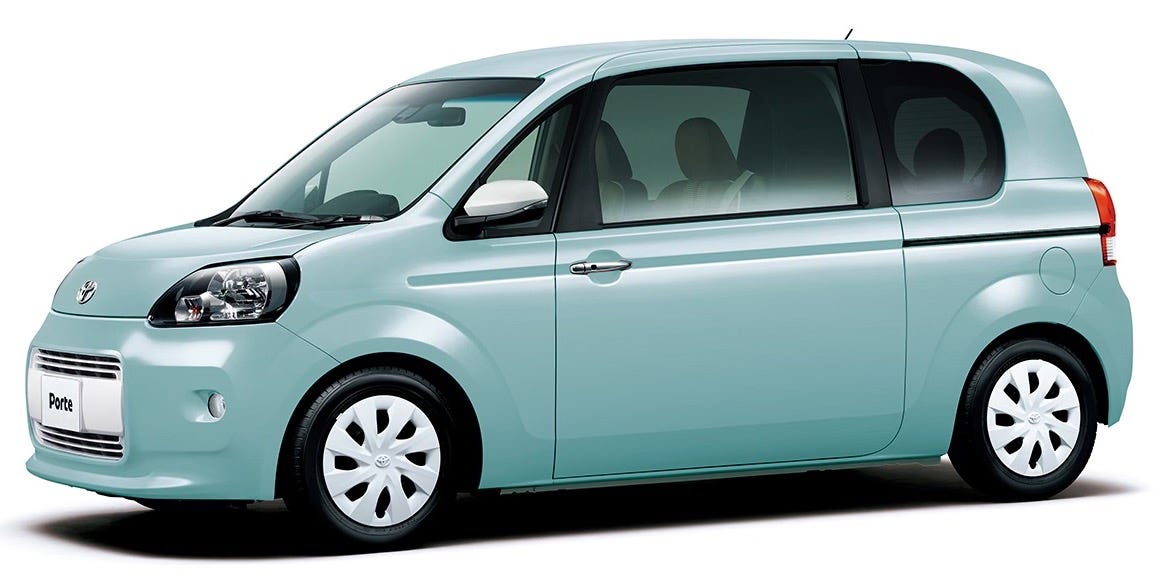
“Porte” means “door” in French, and the Porte has weird doors. The driver’s side has two hinged doors, but the passenger’s side has one big sliding door.
The next photo is proof (though technically, the car on the right is this car’s twin, the Spade):
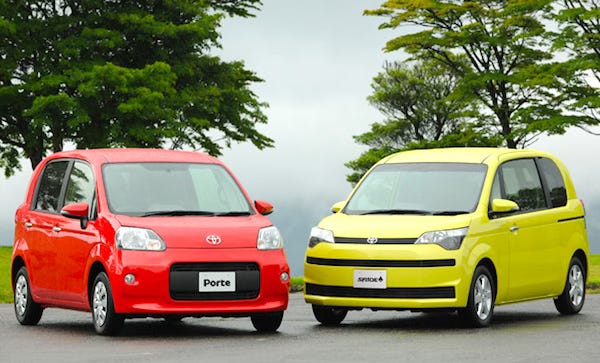
(If you’re thinking that the side with the sliding door looks like the driver’s side, remember that where this car was sold, people drive on the opposite side of the road, so the driver sits on the opposite side of the car.)
The Porte offered a wild interior color combo called “Fromage,” with a mix of chocolate brown, beige, and red accents:
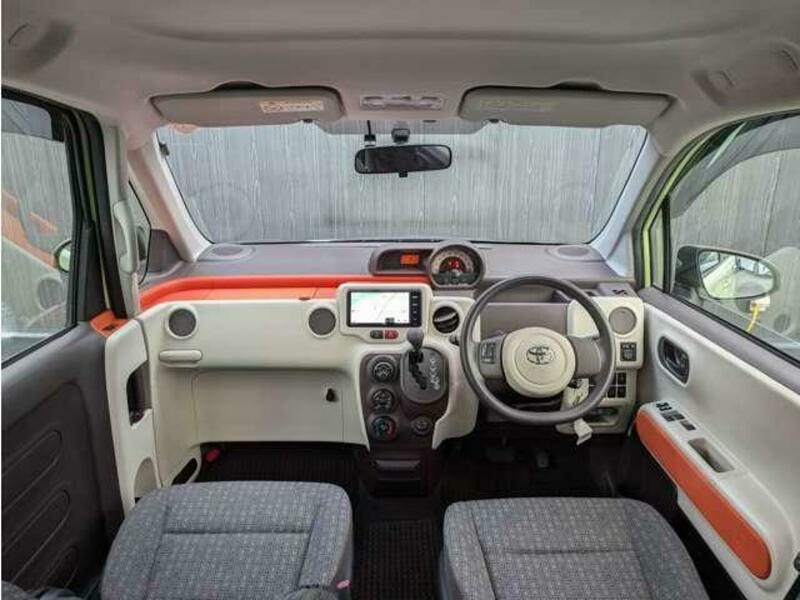
I am obsessed with the Porte because it has a ridiculous number of storage cubbies and fun little details throughout its interior. These include but are not limited to: tissue holders (front and rear), umbrella holders, postcard holders, and even a ruler on the wall so you can watch your child grow up:


As you can see from the marketing images, Toyota aimed the Porte at traditional families comprised of bird men and their human wives and children:
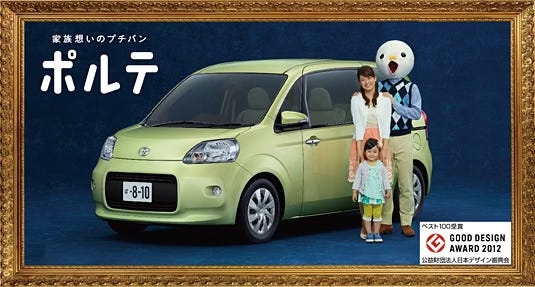
Photos: Toyota, Best Selling Cars Blog, Google Images, Toyota, Toyota
Dive deeper
Toyota WiLL Vi
2000–2001
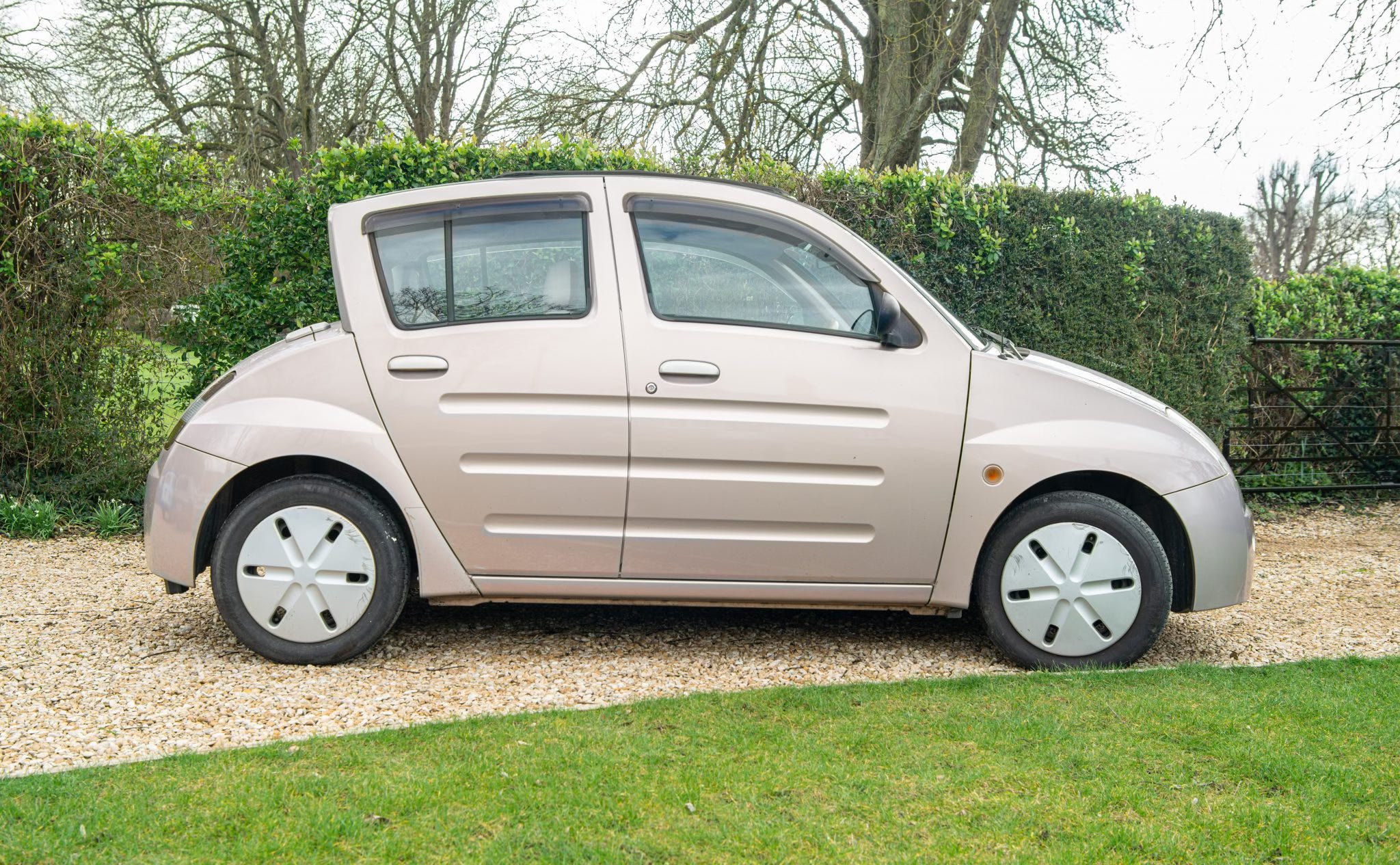
So this car has…a shape. As you can see below, the rear windshield has what Toyota calls a “cliff-cut” design. (This car enthusiast went to the trouble of chronicling the history of cliff-cut rear windshields so I don’t have to.)
But that’s not the only weird thing about this car’s design. I recently watched a YouTube video by Ethan of Hello Road about this car, and he puts it best:
“There’s exaggerated curves, extended wheel arches, strangely converging lines, debosssed grooves on the body panels, exposed hinges, and wheel covers that are reminiscent of sand dollars.”
Breathe it in:


This car wasn’t sold as a Toyota. It was branded “WiLL,” which was the name of a Japanese collaboration between Toyota and other companies, like Panasonic, to sell youth-oriented products around the turn of the millennium.
The interior is full of rich browns, interesting shapes and textures, and a front bench seat that Toyota says is “meant to create the sense of sitting on a living room sofa”:
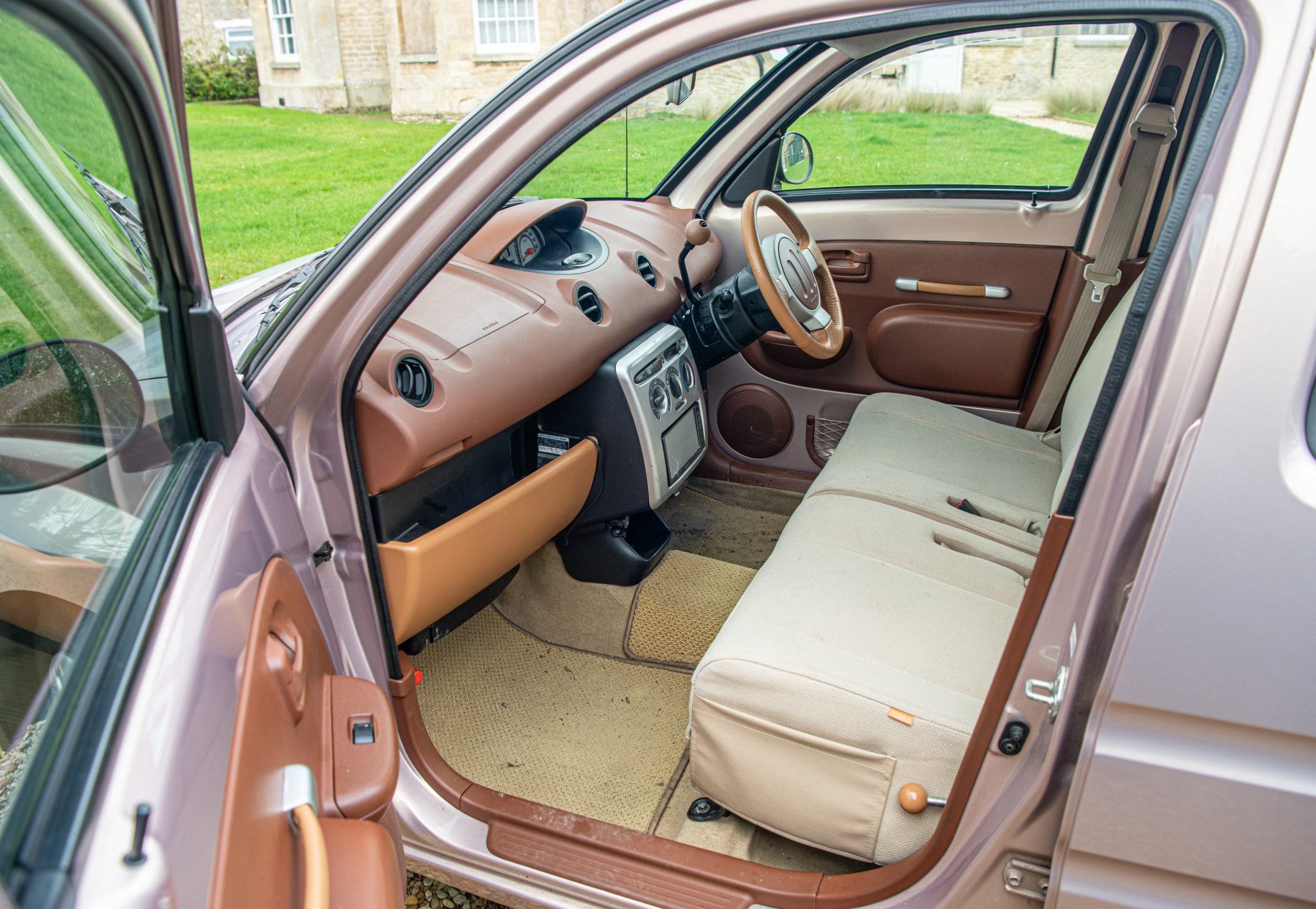
Photos: Toyota, Cars & Bids
Dive deeper
Read more about the WiLL Vi:
Nissan “Pike cars”
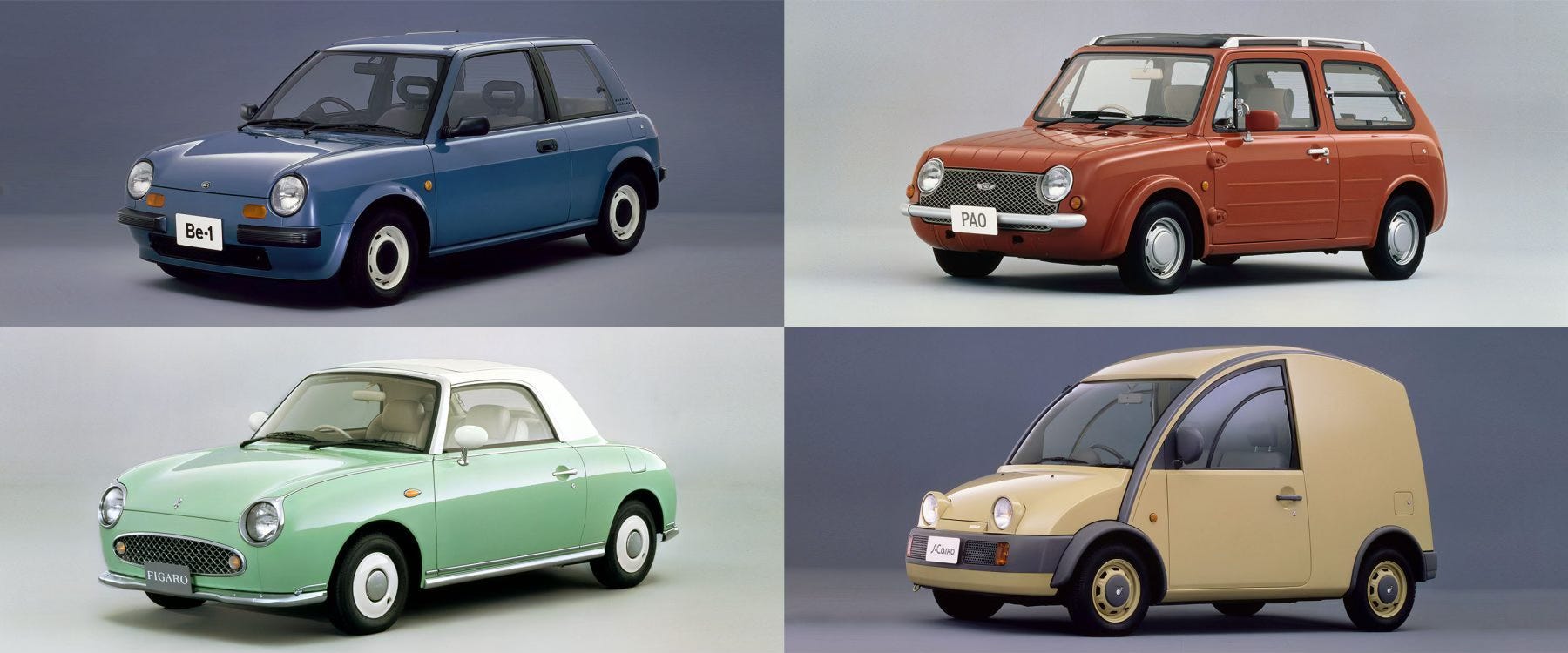
In the late 1980s and early 1990s, Nissan took the bones of their serviceable yet boring subcompact and compact cars, and used them to build four delightful, retro-styled, limited-edition tiny cars.
These cars are the Be-1, the Pao, the Figaro, and the S-Cargo. Collectively, these are known as the “Pike cars” or the “Pike Factory cars.” The Pike Factory was not actually a real car factory. Rather, according to Nissan:
“…the name ‘Pike’ was chosen after the medieval spear to evoke the idea of spearheading new, cutting-edge design.”
These cars sold out so fast that Nissan increased the production numbers and sold them via a lottery system.
I’m only going to go through two of the Pike cars in detail, but I’m considering making these cars my next Internet rabbit hole, and frankly, you should too.
Photo: Nissan
Nissan Be-1
1987–1988
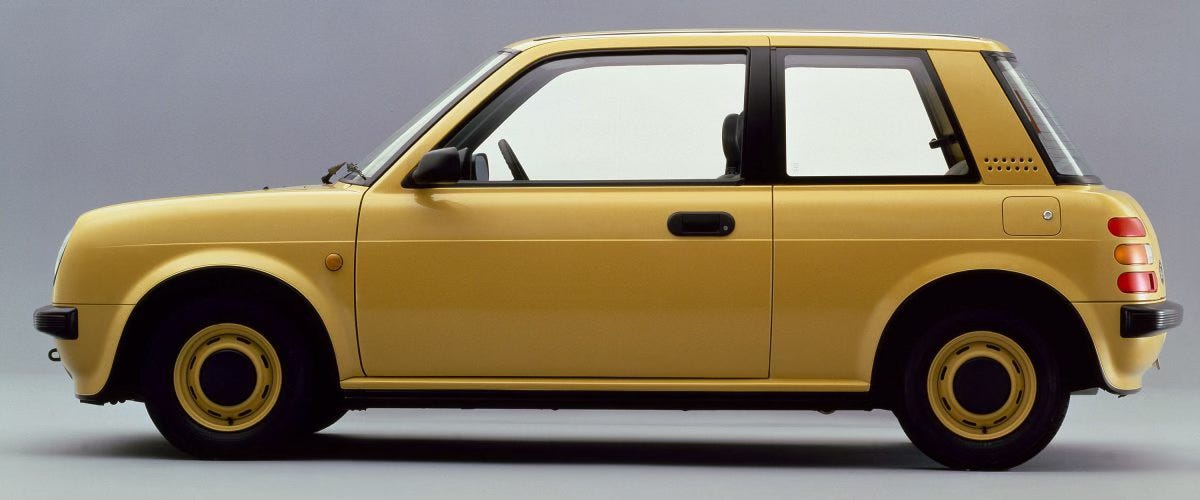
When the Be-1 was in development, Nissan had different groups propose four car designs: proposals A, B1, B2, and C.
B1 won (heh), and the name stuck.
I used to think the Be-1 was the least interesting of the Pike cars. But the more I look at it, the more I appreciate its simplicity. The simple round headlights. The little dots stamped on the side of the car. The way the rear of the car has kind of a staggered look.
I’m also obsessed with these seats:
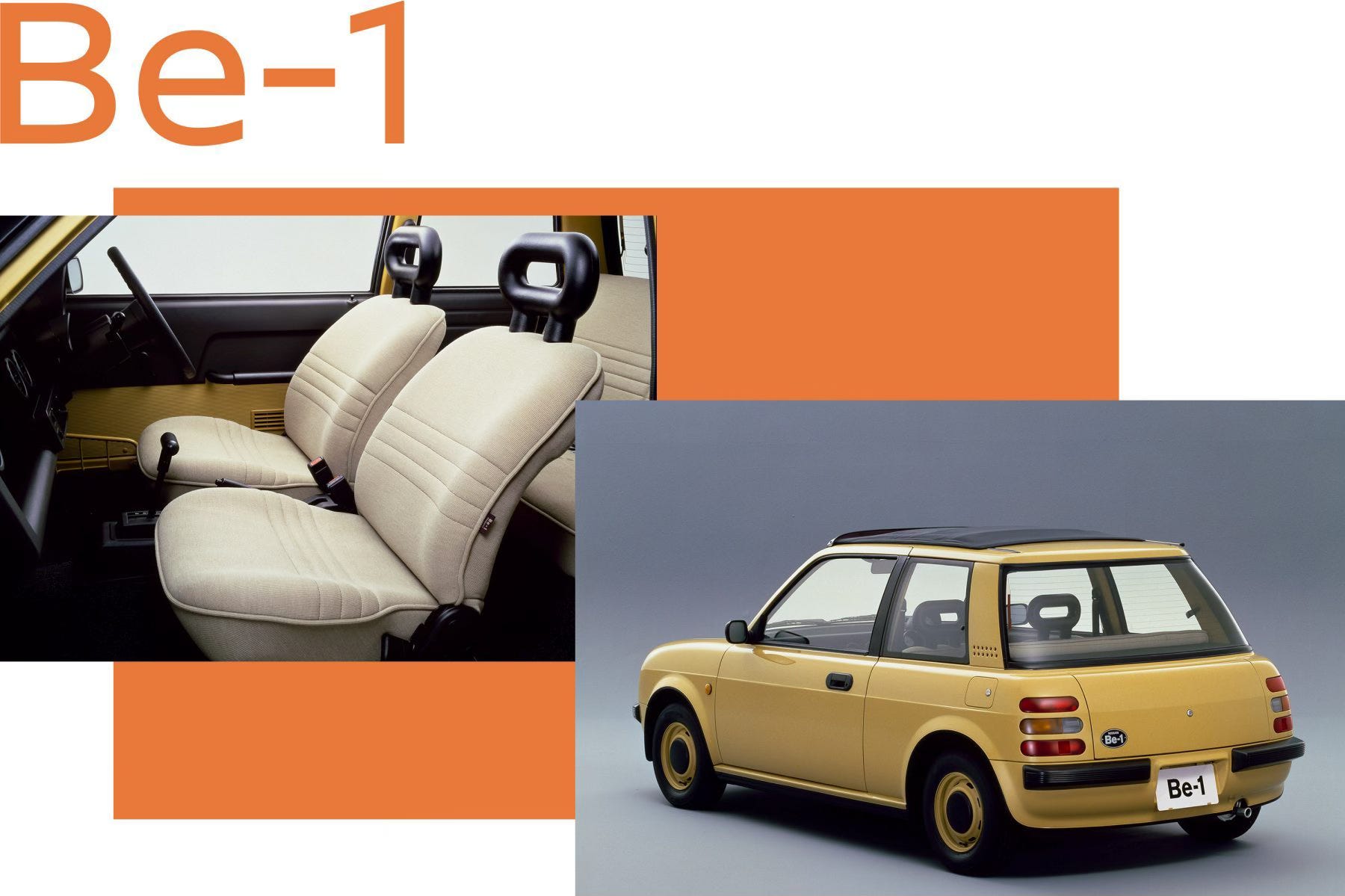
The Be-1 looks like a hatchback, but actually, the rear glass doesn’t lift. The panel underneath it does, though, to reveal an enclosed trunk, like you’d find in a typical sedan.
Photos: Nissan
Nissan Pao
1989–1991
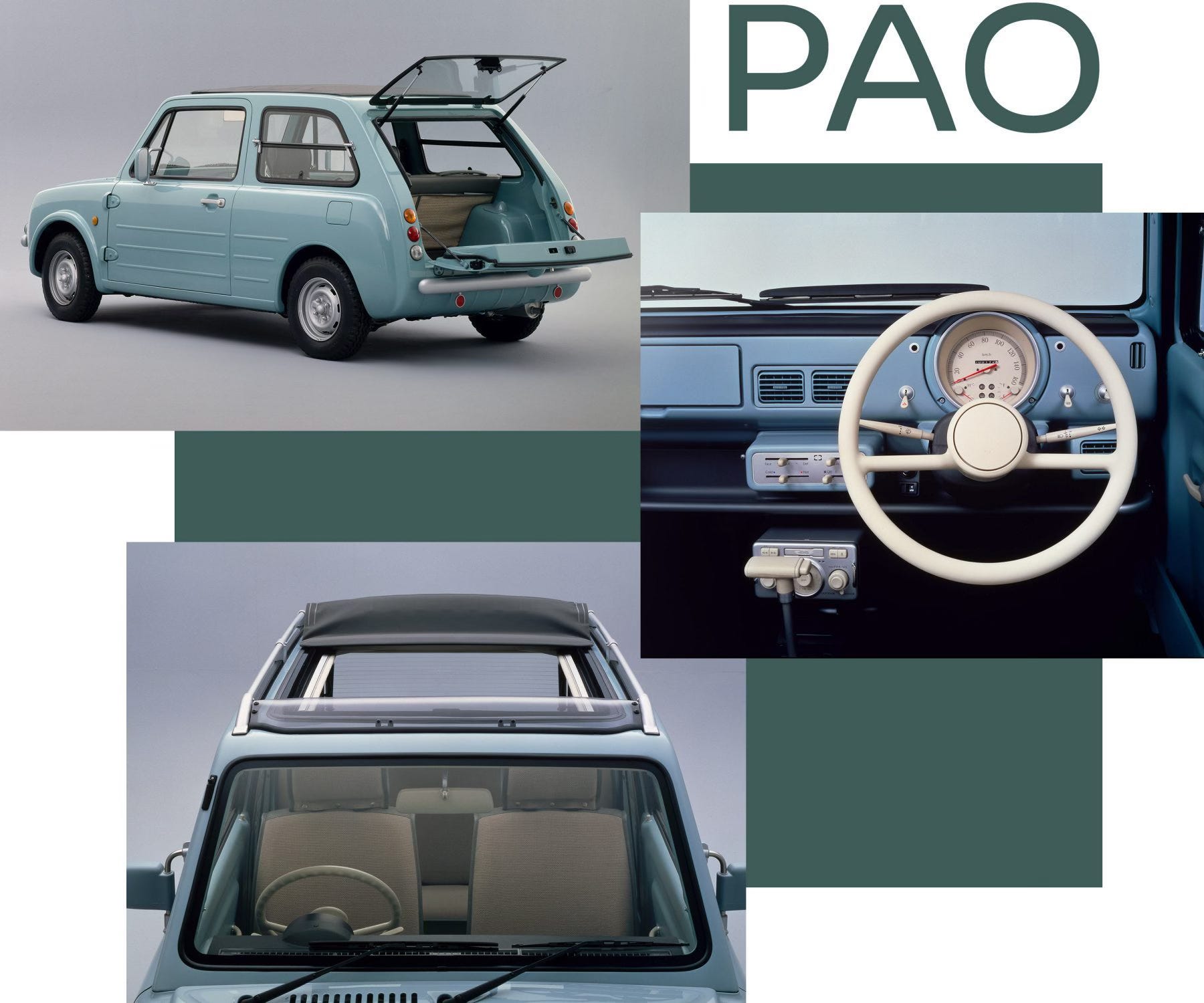
It’s possible the Pao is the most retro car to ever retro. It has flip-up rear side windows, a two-piece tailgate, corrugated side panels, little round headlights and taillights, and more.
I feel like I always see the Pao in this classic pale blue color, and I love it. (It matches my blog.)
Look at all these beautiful details inside and outside the Pao:


Dive deeper
Read more about the Pike cars:
I really do encourage you to check out Nissan’s retrospective on the Pike cars, if only because it has more cool collages for all four of these little guys:


Photos: Nissan
Nissan Nuvu
2008
Concept car (not a production car)
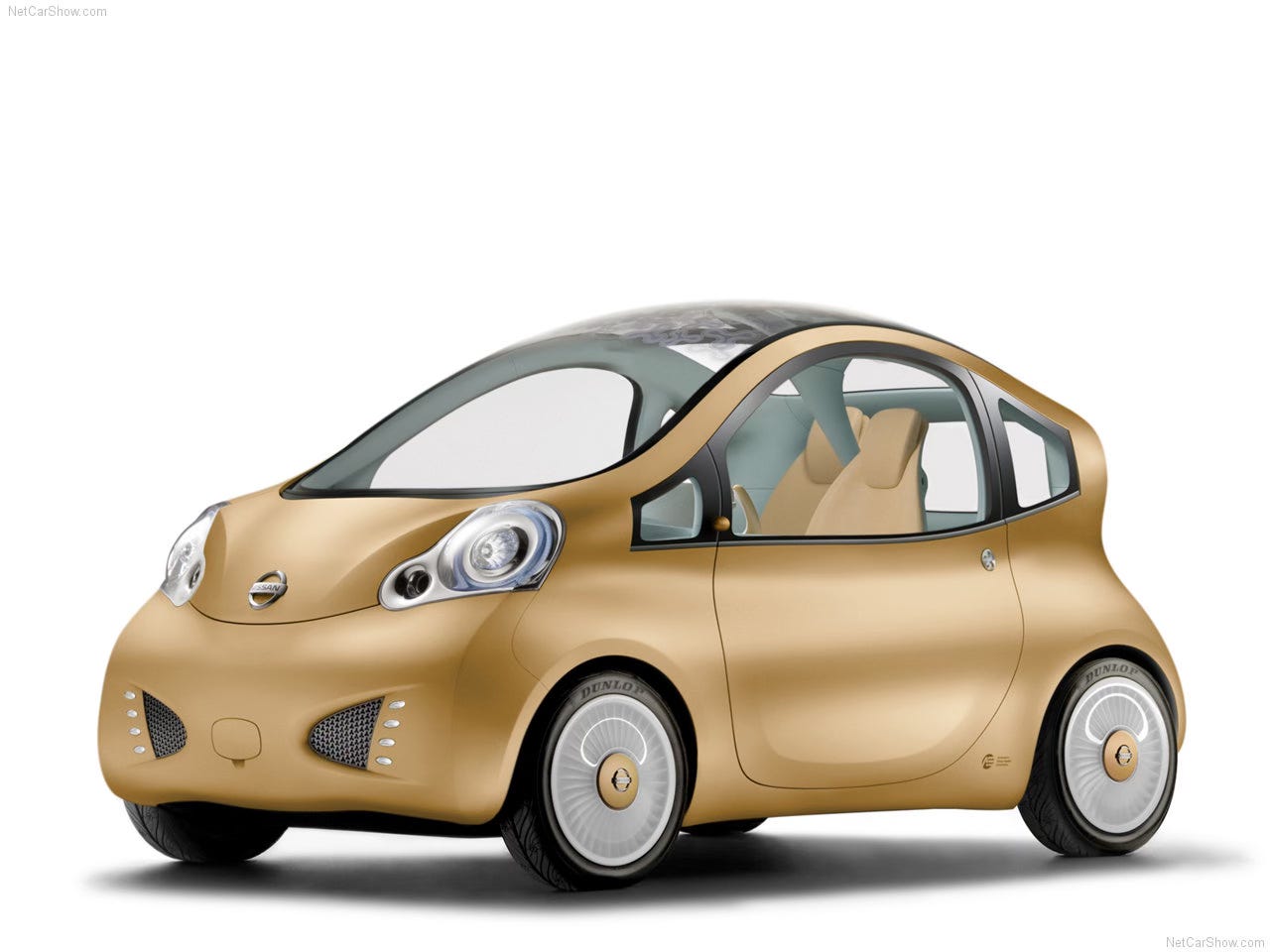
So I have a confession to make. You can’t actually buy a Nuvu, even though you’ll want to by the end of this post. The Nuvu is a concept car, which means it was never mass-produced. Nissan designed it to explore ideas that might end up in future cars. And they used it to test parts of the electric powertrain that ended up in the original Nissan Leaf.
The Nuvu was actually a working, drivable car, unlike some concept cars, and at least one lucky journalist got to drive the thing.
I was obsessed with the Nuvu when I was a kid, and looking back at it, I still am. Look at its cute little face and rump:


Nissan designed the Nuvu to be really small on the outside but really big on the inside. It has three seats (an unusual number), and the third seat could fold up into the dashboard to increase legroom for the main passenger seat behind it. Nissan’s argument was that making our cars smaller and removing unnecessary extra seats would help decrease urban congestion.
The Nuvu’s windshield flows seamlessly into the car’s glass roof, where you’ll notice what Nissan calls the “energy tree.” From Nissan:
“The energy tree is shaped like a thin trunk. As it reaches daylight it branches out under the glass roof providing occupants with protection from bright sunlight... just like a real tree. And providing a visual reminder of Nuvu’s green credentials, covering the branches are dozens of small solar panels shaped like leaves. The panels absorb energy from the sun which is then fed back down the energy tree and used to help recharge the battery and provide an extra power boost for the electric motor.”
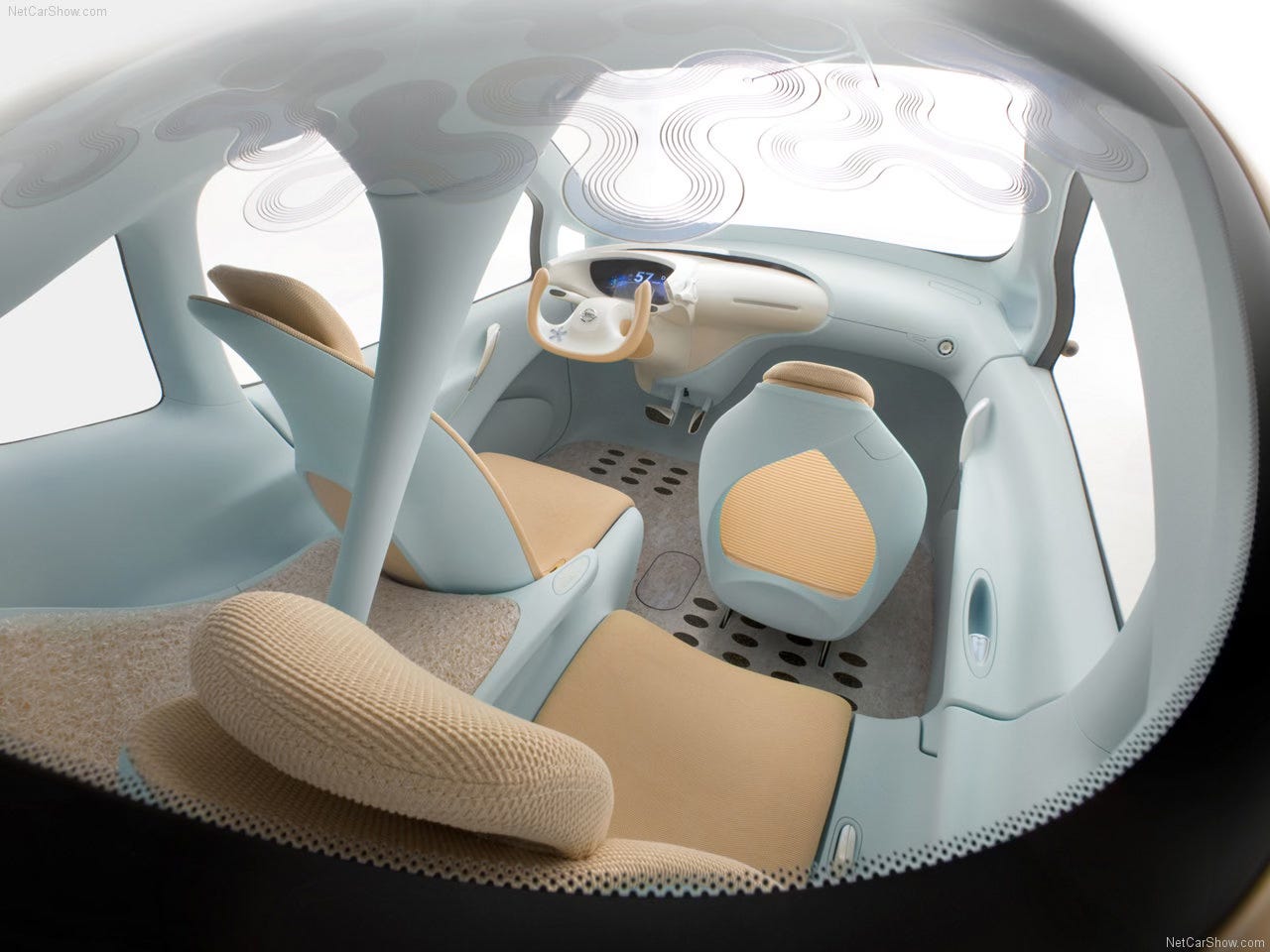
I wonder if the energy tree’s solar panels actually worked in real life, but regardless, the idea is so freaking cool. I mean, name another car that has a tree inside of it.
And look what a beautiful pattern the energy tree makes on the roof:
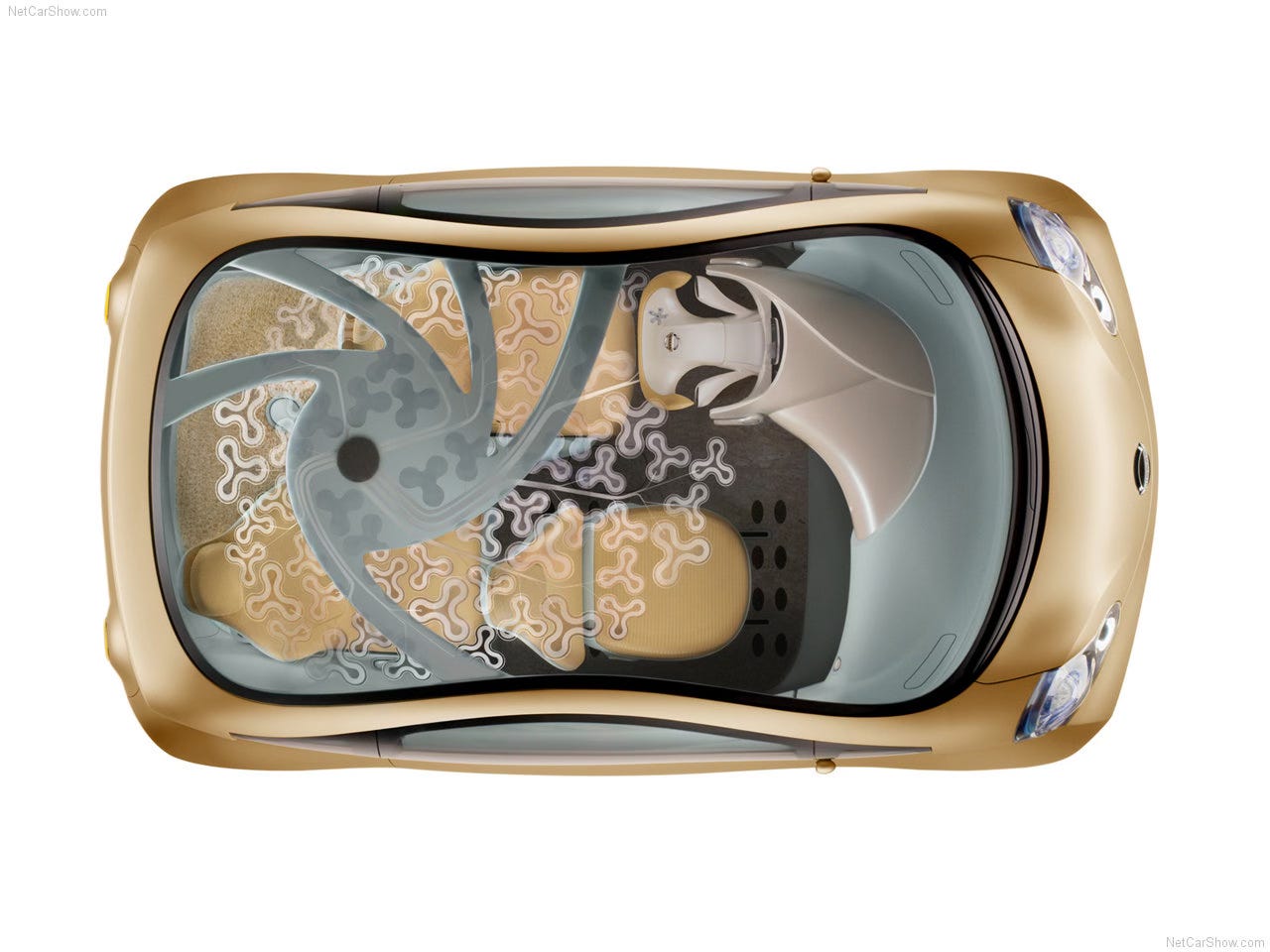
Wow.
Photos: NetCarShow.com
Dive deeper
Read more about the Nuvu:
I hope these tiny cars bring you as much joy as they bring me. Perhaps they’ll inspire you to go down some interesting Internet rabbit holes.
As always, don’t forget to subscribe:
See you next time.
In a mind-deadening virtual meeting and decided to open up the blog - just what my Monday morning needed! Especially love the 'faces' of the cars - the Twingo vents are like a single raised eyebrow...